
Permit expediting · Miami-Dade, Broward, Palm Beach
Building permits in Miami, handled inside your project from the first filing to the final inspection
City and county permits, inspections and condo association submissions are part of the turnkey projects we build in Miami-Dade and Broward.
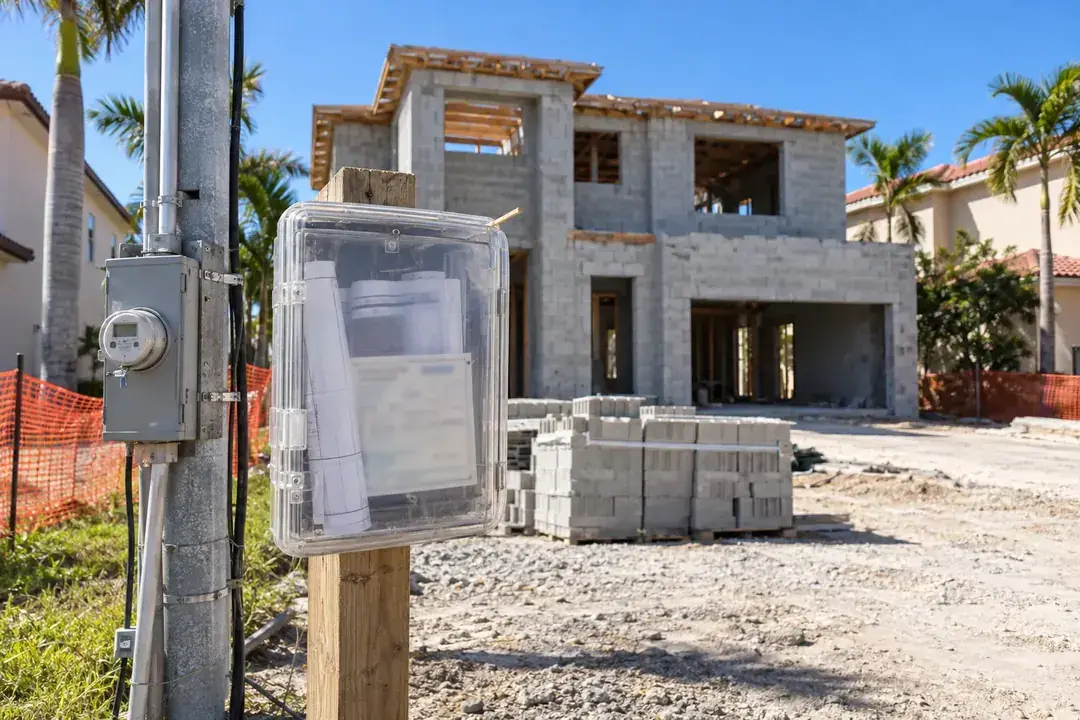
Permits
Permit expediting in Miami, handled inside a turnkey project
If you searched for permit expediting in Miami, you may be looking for someone to hire to file your plans and chase the comments. We don't sell permits as a stand-alone service. On our turnkey projects, from $250,000, permits are part of our work, so there is no second company to hire.
What that covers on a project:
Filing
We submit the application once the design set is ready. In Miami-Dade, new construction and additions need drawings signed and sealed by an architect or an engineer, and incomplete applications are not accepted.
Review tracking
We follow the review and answer the plan reviewers' comments.
Sub-permits
After the main permit, electrical, mechanical, plumbing and gas, roofing and window work can each need its own, and we apply for them.
Inspections
We schedule each one, and in Miami-Dade a request is due by 4:00 p.m. on the business day before. Results land in your client portal.
Closing the project
In Miami-Dade, new construction and renovation need a certificate of occupancy, and a commercial space needs it before the certificate of use for the business.
Condo approvals
We handle the association submission.
Delays begin where the rules say: corrections that miss their deadline end in a denial. Permit fees are paid on top of the construction price. The review times below belong to the city or the county, and none of them is a date we can promise.
Out of state
Building a house in Miami while you live somewhere else
- A client portal with the schedule, selections, photos, inspections and invoices
- Video at every stage and drone footage of the site
- Cameras on site, so you can look in any day
- A weekly confirmation of next steps from your superintendent
- A project manager who speaks English, Spanish or Russian
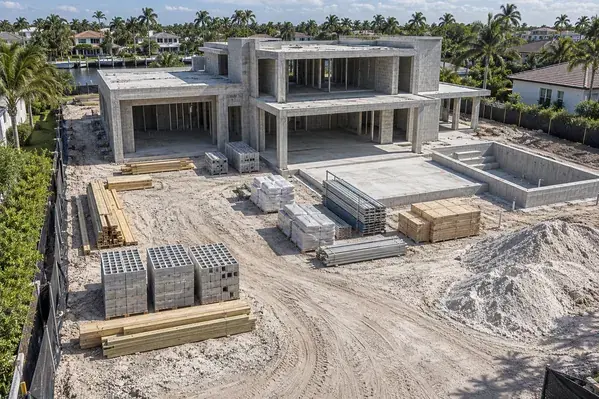
Jurisdictions
How permit review differs in the City of Miami, Miami-Dade and Broward
A permit in South Florida comes from the building department of the city where the lot sits, or from the county in unincorporated areas and in cities that contract with it. The review order, the time limits and the extra approvals change from one jurisdiction to the next, so the same plans can move differently depending on the address.
| Where | Who reviews | How the review runs | Worth knowing |
|---|---|---|---|
| Unincorporated Miami-Dade | Miami-Dade County | Several departments review the plans electronically at the same time, after the first fees are paid. The county says a first review, and each rework, may take 24 hours to 10 business days (the state limits are in the next section). | Applications filed on or after December 31, 2026 fall under the 9th edition of the Florida Building Code. |
| City of Miami | The city's building department | Under the state time limits, outside departments (Fire, Public Works, Zoning, Planning, DERM) review first, then the building disciplines. | An applicant can waive the limits on a notarized form in ProjectDox and get a parallel review. The choice can't be changed after filing. |
| Other Miami-Dade cities | Often the city's own building department, since the county has 34 municipalities | A city with its own building department sets its own procedure and approvals. | Coral Gables usually sends new homes through its Board of Architects before the permit. In Miami Beach, work inside a condo unit has needed the association's letter of approval since March 14, 2022. Miami Beach projects |
| Broward County and its cities | Broward County in unincorporated areas and in cities that contract with it; the county has 31 municipalities | Cities with their own building departments run their own process. For Fort Lauderdale, see new homes in Fort Lauderdale. | The county's ePermits process includes an environmental review. Ask which approvals your site needs. |
Envelope products
Products for the building envelope in Miami-Dade, such as windows and doors, also need county approval, which the hurricane-resistant homes page explains.
Timeline
How long it takes to build a custom home in Miami
Strategy, lot and budget2–3 months
A site visit before any contract, a line-by-line estimate and a meeting with your project manager.
Design6–9 months
Plans and selections, tied to the budget and the price cap.
Permits3–6 months
City and county permits, inspections and association submissions are on us.
Construction16–22 months
Your superintendent confirms the next steps every week, with photos and inspections in your client portal.
Usually 28–36 months from the first meeting to move-in. These are estimates, not promises: rain, inspections and permit queues move dates, and you see every change in the portal the week it happens. On average the build takes 2–4 hours of your time per week.
Get a timeline for my lotReview deadlines
Florida permit review deadlines, from application to final inspection
Florida law gives a city or county a fixed number of business days to answer a complete permit application, and it limits how long corrections can take. The deadlines apply to every applicant. They help you plan, but they start only when the application is complete.
- 01
A complete application
The authority has 5 business days to say what is missing. If it stays silent, the application counts as complete (Florida Statutes 553.792). We file the full drawing set with the product approvals attached. Miami-Dade requires county approval for windows, doors and other envelope products, which the hurricane-resistant homes page explains.
- 02
The review clock
The authority approves, approves with conditions or denies within 30 business days for a residential building under 7,500 sq ft and for roofing, electrical, mechanical and plumbing work. It has 60 business days for residential buildings of 7,500 sq ft and up, for nonresidential buildings up to 25,000 sq ft and for apartment buildings up to 50 units. Work under $15,000 in an existing single-family home gets 5 business days. A local rule can set a shorter limit. The applicant may waive the limits in writing, and in the City of Miami that switches to a parallel review.
- 03
Comments and corrections
The applicant has 10 business days to correct the plans, or the application is denied. The authority then has 10 business days to answer. A late answer from the authority reduces its fee, unless the applicant agreed to more time. Corrections have a 10-business-day limit, and we work to it.
- 04
A private provider
Under section 553.791, an owner, or a contractor with the owner's written permission, can hire a private provider to review the plans and perform the inspections. The local official checks the forms and has 10 business days to issue the permit or a notice, or 5 for one trade in a one- or two-family home. With no notice in time, the application counts as approved and the permit is issued the next business day.
- 05
Inspections to closing
In Miami-Dade an extension adds 180 days to get a valid inspection, and a permit expired for more than 90 days without a final inspection can be reissued with 180 days to close it.
These figures follow the statute as amended in 2026 (checked October 31, 2026). Our timeline for a new home puts the whole permits phase at an estimated 3 to 6 months, which is longer than a single 30-business-day review because it also covers corrections and sub-permits. Waterfront lots can add county and state approvals, which the waterfront construction and seawall pages cover. The full path of a project is on the how we build page.
Your money
How a Miami home build works when you're not paying ahead
4 payments, not a big deposit
At signing, at the start of work, at the midpoint and at about 99% completion. Each payment is for a stage you have approved.
A price cap in the contract
Cost plus a fixed fee, with a maximum price. Savings stay with you. Anything above the cap is paid by the builder.
Every bid and invoice in view
A shared budget tracker shows each subcontractor bid, each change and each invoice.
One contractor, one contract
The same permanent subcontractors on every job, and one company answering for all of them.
3-year warranty, exclusions in writing
The warranty term is a number in your contract, and so is the list of what it does not cover.
An answer in under 24 hours
By phone, WhatsApp, text or email, in English, Spanish or Russian.
FAQ
Questions about permit expediting and building permits in Miami
What does a permit expediter do?
An expediter, also called a permit runner, submits applications, presents documents and follows them through processing. In the City of Miami, expediters register first, which is free and done through iBuild. They may not stand in for registered design professionals, file documents they know or suspect are false, or go around the set procedure. On our projects we do this work ourselves.
Do you offer permit expediting on its own?
No. We handle permits only inside a turnkey project, which starts at $250,000, and we don't file for another contractor's job. If you are planning a build, tell us about your project and we contact you within a day.
How long does it take to get a building permit in Miami?
Miami-Dade says a first plan review, and each review after corrections, may take 24 hours to 10 business days. That range is the county's own and covers review only. In the City of Miami, state law sets 30 or 60 business days, depending on the building. The whole permits phase of a new home is estimated at 3 to 6 months.
How long do permits take to approve in Florida?
Under section 553.792, a local government has 30 or 60 business days to approve, approve with conditions or deny a complete application, depending on the building. Work under $15,000 in an existing single-family home gets 5. The applicant can waive these limits in writing.
How can I extend a permit in Miami-Dade?
A Miami-Dade extension adds 180 days to obtain a valid inspection. A permit expired for more than 90 days without a final inspection can be reissued if it no longer qualifies for an extension, with 180 days to close it.
How much does a building permit cost in Miami?
Fees depend on the jurisdiction and the type of work, and the city or county publishes them. They are not in our construction price, and the pricing and terms page lists everything the price leaves out. Miami-Dade also collects road and school impact fees, and fire impact fees except in Miami, Miami Beach, Hialeah, Coral Gables and Key Biscayne.
How much does a permit expediter cost in Miami?
One permit-software company's 2025 guide to Miami lists $50 to $200 an hour, $1,500 to $5,000 and up for a flat project fee, and $150 to $300 to file, with city fees extra. Those are that company's figures, not our prices. On our projects we do the permit work ourselves, and the fees are paid on top of the construction price.
Can a permit be fast-tracked in Miami-Dade?
Only in defined cases. The county runs expedited programs for affordable and workforce housing, large commercial buildings, repeating house models, certified green projects and master models of 25 lots or more. The county's paid Optional Plan Review is currently unavailable (checked October 31, 2026). Nobody can promise a permit date, and we don't.