
Tenant improvement · Miami-Dade, Broward, Palm Beach
Build out your leased space in Miami with a maximum price in writing
Tenant improvements for offices, retail spaces and restaurants in Miami-Dade, Broward and Palm Beach. Cost plus a fixed fee, a price cap in the contract and four payments that follow the stages of the work.
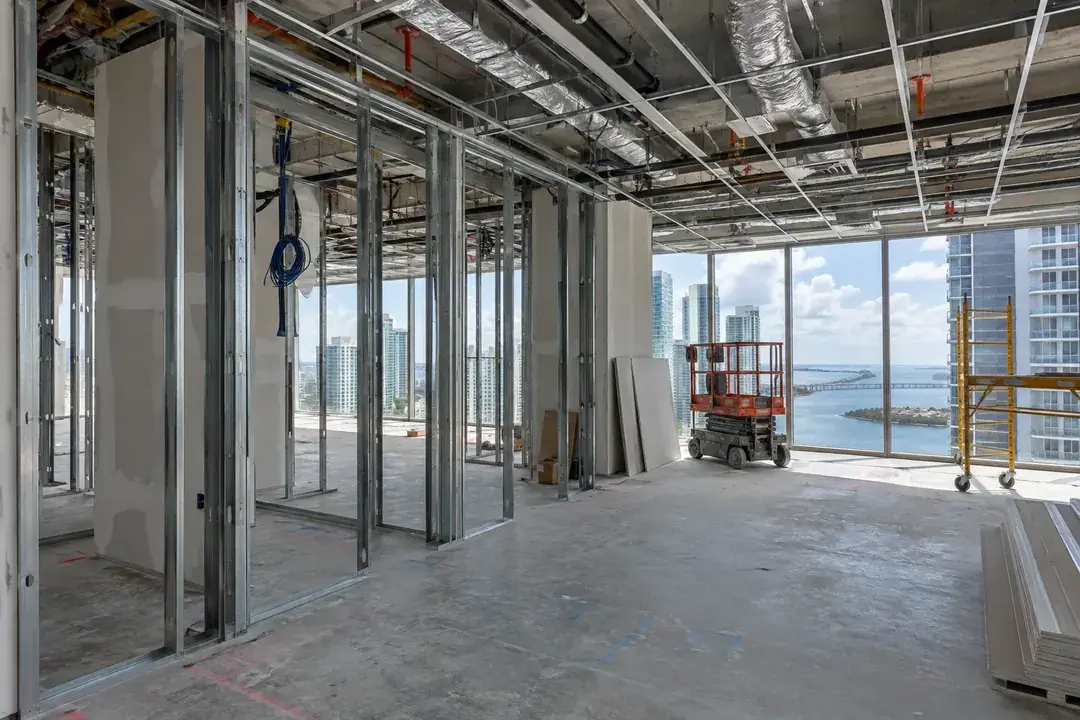
Tenant improvement
Tenant improvement contractor in Miami for offices, retail and restaurants
A tenant improvement contractor fits out the space you lease so it works for your business: walls and ceilings, electrical, plumbing, air conditioning and finishes, plus the permits and inspections that go with them. Florida Home Build does this for offices, retail spaces and restaurants in Miami-Dade, Broward and Palm Beach, under one contract.
Tenant improvement and build-out describe the same kind of project: fitting out leased commercial space, whether it is raw shell or second-generation space a previous tenant left behind. Building on a property you own is different, because a landlord has a say and the lease writes some of the rules before the first wall goes up.
Here is the order in which a tenant project unfolds, and where each part is covered:
- The contract: price cap, payments and warranty, in the block right below.
- The lease and the landlord: the allowance, approvals and lien rules, in the table after it.
- The paperwork: plans, the asbestos survey, permits and inspections, in the steps that follow.
- The price and the schedule: answers in the questions at the end.
Commercial projects with us start at $250,000. Business owners get a line-by-line estimate after a visit to the space and before signing. The scope comes from the plans and the lease, and the schedule depends on landlord approvals, permitting and inspections, so timelines are estimates, not promises.

Your money
How a Miami home build works when you're not paying ahead
4 payments, not a big deposit
At signing, at the start of work, at the midpoint and at about 99% completion. Each payment is for a stage you have approved.
A price cap in the contract
Cost plus a fixed fee, with a maximum price. Savings stay with you. Anything above the cap is paid by the builder.
Every bid and invoice in view
A shared budget tracker shows each subcontractor bid, each change and each invoice.
One contractor, one contract
The same permanent subcontractors on every job, and one company answering for all of them.
3-year warranty, exclusions in writing
The warranty term is a number in your contract, and so is the list of what it does not cover.
An answer in under 24 hours
By phone, WhatsApp, text or email, in English, Spanish or Russian.
Lease
Lease and landlord rules for a tenant improvement in Florida
In a tenant improvement the lease matters as much as the plans. It decides who pays for the work, what the landlord must approve and who is exposed if a contractor is not paid. The table lists what to confirm before you sign a construction contract. Lease terms are legal terms, so go through them with your attorney.
| Topic | What to confirm | Comes from |
|---|---|---|
| Allowance | Whether the landlord offers a tenant improvement allowance, how much (often set per square foot), when it is paid and who covers the cost above it | Comes fromThe lease |
| Plans and contractor | Whether the landlord must approve your plans and your contractor in writing | Comes fromThe lease |
| Building rules | Work hours, loading dock and elevator use, protection of shared corridors, and any insurance certificate the building asks contractors for | Comes fromThe lease and the building |
| Liens | Whether the lease bars liens against the landlord's interest, and whether that bar was recorded in the county records | Comes fromThe lease and Florida Statutes s. 713.10 |
| Rent and restoration | When rent starts, and what you restore when the lease ends | Comes fromThe lease |
Allowance
An allowance is the amount a landlord contributes toward fitting out the space. The tenant pays what exceeds it, and landlords often build the allowance into the rent, so it is worth setting a construction budget before you agree to a number.
Liens
Liens deserve their own check. Under Florida Statutes s. 713.10, when a tenant improves a property under a lease, a construction lien can reach the landlord's interest too. The landlord is protected only if the lease prohibits it and the prohibition is recorded before the notice of commencement. If your lease has such a clause, tell your contractor about it: the statute puts that duty on the tenant, and a contractor may ask the landlord in writing for a certified copy of the clause. This is a general rule, not legal advice.
Permits
From permit to certificate of use on a tenant improvement in Miami
A tenant improvement ends with paperwork as well as paint. In Miami-Dade the project needs plans, a permit, inspections and, before your business opens, a certificate of occupancy or completion followed by a certificate of use. City and county permits and inspections are part of our work, and the steps below show what happens in between.
- 01
Landlord sign-off
If the lease asks for it, your plans and contractor go to the landlord first. The table above lists what to confirm.
- 02
Plans
In unincorporated Miami-Dade, interior walls, electrical and plumbing need a permit, and the plans are signed and sealed by an architect or an engineer. Cities inside the county set their own rules, so the building department for your address has the final word.
- 03
Asbestos survey
For a commercial renovation over 160 square feet, Miami-Dade requires an asbestos survey with an affidavit before the work starts. If the work disturbs asbestos, a notification is due no later than 10 working days ahead.
- 04
Permit and notice of commencement
Before the first inspection, the county asks for a copy of the recorded notice of commencement. We handle the permits; for how that works inside a project, see permit expediting in Miami.
- 05
Construction and inspections
Inspections happen at set stages of the work. Storefront glass and entry doors in Miami-Dade need product approval, and our guide to hurricane-zone rules explains why.
- 06
Certificates
After the final inspections you receive a certificate of occupancy (CO) or a certificate of completion (CC). The unincorporated county issues a CO even for remodels, the City of Miami issues a CC, and other cities have their own rules. Your business then needs its certificate of use. Accessibility and restaurant plan review are in the commercial permits table.
FAQ
Questions about tenant improvements in Miami
What is a tenant improvement, and how is it different from a build-out?
Tenant improvement means changes made to a leased space for the tenant's use. A build-out usually means the same job, often starting from raw shell space. Both end with a space your business can open in. With one general contractor the trades, permits and inspections sit under a single contract.
Who pays for a tenant improvement, the landlord or the tenant?
Often both. A landlord may offer a tenant improvement allowance, a set amount toward the work, and the tenant pays anything above it. The amount depends on the market and the length of the lease, so it is part of the lease negotiation. The table above lists what to confirm.
How much does a tenant improvement cost in Miami?
Published figures vary widely. Cushman & Wakefield's 2026 fit-out guide puts the average U.S. office fit-out near $162 per square foot, a national number with no Miami breakdown. GWA Construction, a North Miami Beach contractor, says an office build-out typically costs $50–150 per square foot. Those are their figures. How we price a project is cost plus a fixed fee with a maximum price.
How long does a tenant improvement take in Miami?
Other Miami contractors publish their own ranges: Blank Construction says typically 4 to 10 weeks, MT Construction Group 4 to 16 weeks. For us it depends on landlord approvals, permitting and inspections. We give an estimate after we see the space, and a timeline is never a guarantee.
Who handles permits and landlord approvals on a tenant improvement?
City and county permits and inspections are part of our work. Landlord sign-offs follow your lease, and the table above lists what to confirm in it. Rules differ by city, so the building department for your address decides the details.
Is an asbestos survey required for a tenant improvement in Miami-Dade?
For a tenant improvement that counts as a commercial renovation over 160 square feet, yes: Miami-Dade requires an asbestos survey with an affidavit before the work starts. If the survey shows asbestos the work will disturb, a notification goes to the county no later than 10 working days ahead.
Do I need an architect for a tenant improvement?
In unincorporated Miami-Dade, the plans for interior walls, electrical and plumbing must be signed and sealed by an architect or an engineer, and cities inside the county have their own rules. Your building department confirms what applies at your address, and we check it when we prepare your free estimate.
What warranty and payment terms apply to a tenant improvement?
The warranty on our work is 3 years, with the exclusions listed in the contract. Four payments follow the stages of the work, and the contract sets a maximum price. More on the warranty.